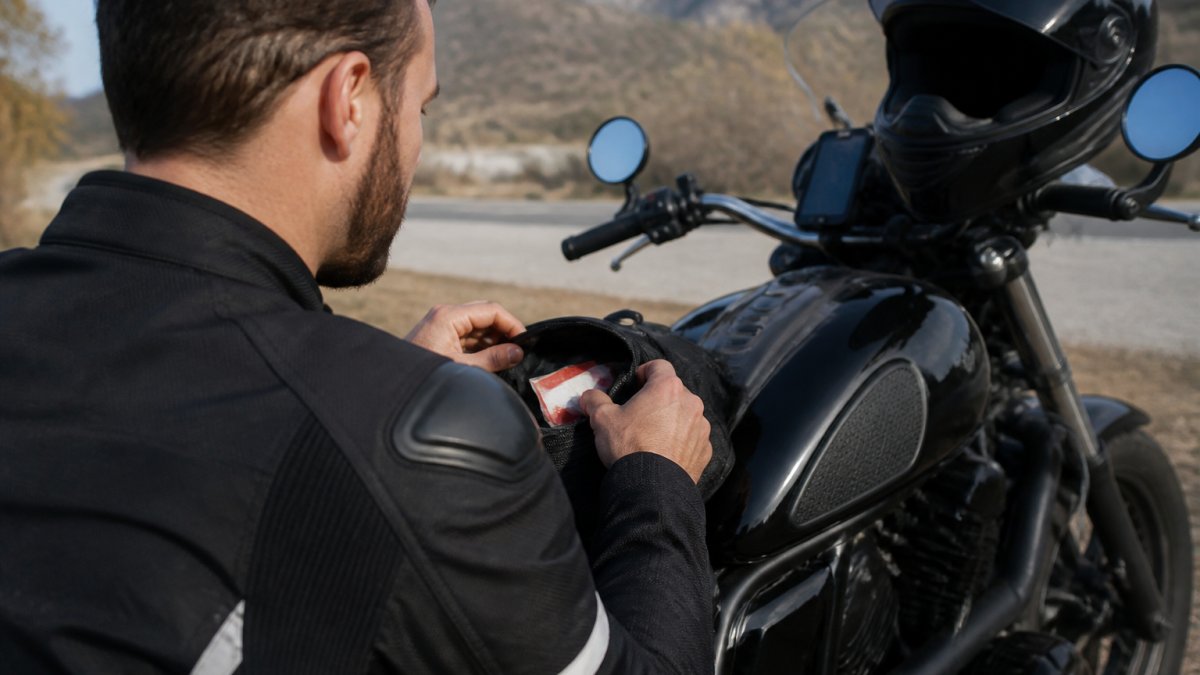
 how-to
How to Store Emergency Contacts on a Motorcycle
Table of Contents
- What You'll Need Before You Start
- Step 1: Decide What Emergency Contacts Motorcycle Riders Should Carry
- Step 2: Write an ICE Card for Motorcyclists That Survives a Crash
- Step 3: Add NFC Medical ID Tags for Bikers to Your Jacket, Helmet or Bike
- Step 4: Prepare Emergency Medical Information for First Responders
- Step 5: Set Up Your Phone Lock Screen as a Backup
- Step 6: Keep Your Details Current and Check Them Twice a Year
- Common Mistakes to Avoid
- Frequently Asked Questions
Last Updated: September 27, 2026
What You'll Need Before You Start
Storing emergency contacts on a motorcycle is the practice of carrying your medical details and next-of-kin information in a format a first responder can find and read within seconds of a crash. It matters because a rider who cannot speak is a rider who cannot explain a penicillin allergy, a heart condition, or who to ring. This guide from VEXA Moto walks through six steps that take under an hour to set up. You will need a few basics first:
- A written list of your medical conditions and current medicines
- Two emergency contacts with mobile numbers
- A waterproof card, or an NFC tag system
- A smartphone with a lock screen you can edit
- A permanent marker and clear tape
Gather these before you start. Half-finished emergency info is worse than none.
Step 1: Decide What Emergency Contacts Motorcycle Riders Should Carry
The emergency contacts motorcycle riders should carry are the people who can make medical decisions for you and the details that change how a paramedic treats you. Keep the list short. Three contacts maximum.
Include these on every card:
- One next of kin, with a mobile number
- One backup contact, ideally a second family member
- Your GP surgery name
- Blood type, if you know it
- Allergies and current medicines
- Any implant, pacemaker, or condition like diabetes or epilepsy
Details That Matter Most to Ambulance Crews
Ambulance crews look for three things first: allergies, medicines, and existing conditions. Those three decide which drugs they can give you. A contact name helps them reach family, but it does not change your treatment. Put the medical facts at the top of the card and the phone numbers below.
The NHS guidance on emergency and urgent care explains how urgent care is triaged, which is useful context for what crews prioritise.
Step 2: Write an ICE Card for Motorcyclists That Survives a Crash
An ICE card for motorcyclists is a small waterproof card carrying your "In Case of Emergency" details, kept on your person rather than in a bag that may be thrown clear. Write it by hand or print it, then seal it.
A common mistake is using a paper card in a jacket pocket that gets soaked. Water ruins ink fast. Try this:
- Write in permanent marker, not biro
- Laminate the card, or wrap it in clear tape on both sides
- Keep it under 85mm by 55mm so it fits a wallet or chest pocket
- Add the word ICE at the top in large letters
Step 3: Add NFC Medical ID Tags for Bikers to Your Jacket, Helmet or Bike
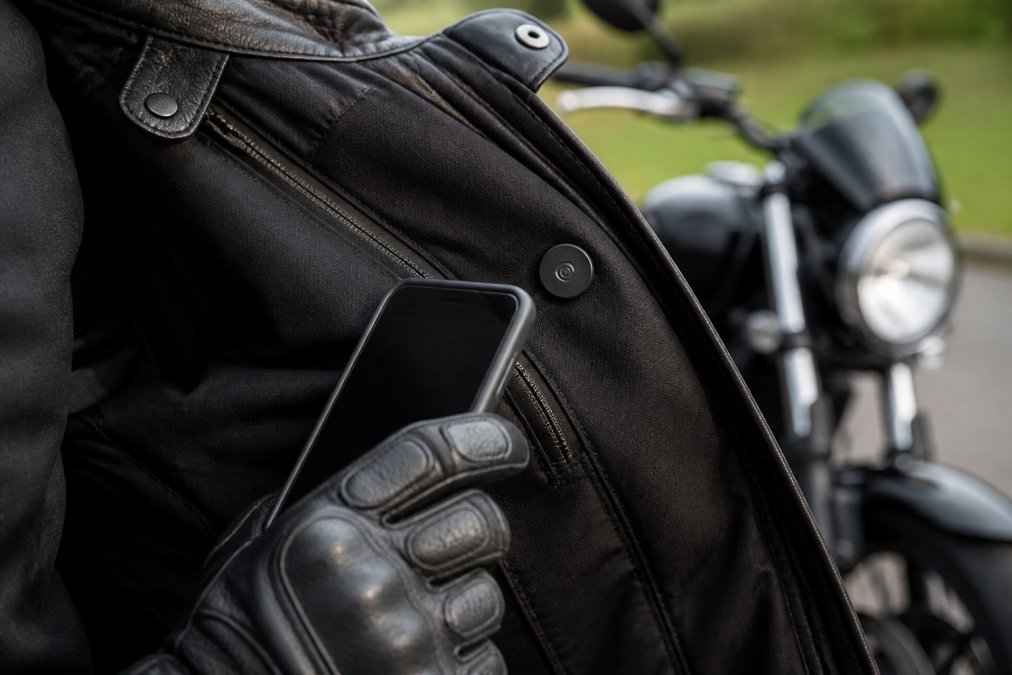
NFC medical ID tags for bikers are small chips that hold a link to your emergency profile. A responder taps a phone against the tag and your details open on screen. VEXA Moto builds this kind of system, using NFC-enabled cards, key tags, and bike decals that open your medical info and next-of-kin details for a first responder. The advantage over a paper card is simple: the data stays legible, and it can be updated without rewriting anything.
Where to Attach a Tag So It Gets Found
Placement decides whether a tag ever gets used. Crews check predictable spots. Put tags where a stranger would look:
- Inside the jacket flap, near the chest zip
- On the helmet strap or the outer shell
- On the bike itself, near the ignition or under the seat
- On a key tag, since keys usually stay with the rider
One honest limitation: a tag only works if the responder has a phone that reads NFC. Many do, but not all. That is why a tag should sit alongside a written card, never instead of one.
Step 4: Prepare Emergency Medical Information for First Responders
Emergency medical information for first responders should answer four questions in plain words: what is wrong with you, what will harm you, what you take, and who to call. Write it once, then reuse it everywhere.
Keep the wording plain. Avoid medical shorthand a responder has to decode. Instead of "NKDA", write "no known drug allergies". Instead of "T2DM", write "type 2 diabetes". The Resuscitation Council UK guidelines set out how emergency care is delivered, and clarity of patient information supports that process.
| Detail | Why It Matters | Where to Put It |
|---|---|---|
| Allergies | Stops a harmful drug being given | Top of card and tag profile |
| Current medicines | Prevents dangerous interactions | Card and phone lock screen |
| Conditions | Shapes treatment decisions | Card and tag profile |
| Next of kin | Reaches family fast | Card, tag, and phone |
Step 5: Set Up Your Phone Lock Screen as a Backup
Your phone lock screen is the backup that costs nothing. Most phones let you show emergency info without unlocking the device. Set it up in five minutes.
On most handsets you can:
- Add a medical ID that shows from the lock screen
- List allergies, medicines, and conditions there
- Add one emergency contact number
- Keep the phone charged and on your person
A phone can break in a crash, so treat this as a second layer, not the only one. The Information Commissioner's Office guidance on personal data is worth a read if you want to understand how your details should be handled by any system storing them.
Step 6: Keep Your Details Current and Check Them Twice a Year
Emergency details go stale quietly. A medicine changes, a contact number dies, a condition develops. Set two dates a year to check everything, perhaps when the clocks change.
Run through this checklist each time:
- Confirm both contact numbers still work
- Update any new medicine or dosage
- Remove medicines you no longer take
- Re-check allergies
- Update your NFC tag profile
- Replace a worn or faded card
Five minutes twice a year keeps the whole system trustworthy.
Common Mistakes to Avoid
The biggest mistake is treating this as a one-off job. Details change, and a card written three years ago may now be wrong in ways that matter.
Other common errors:
- Keeping contacts only in a tank bag that flies off in a crash
- Writing in faint ink that fades
- Using medical shorthand a responder must decode
- Relying on a single method with no backup
- Forgetting to tell your contacts they are listed
Emergency preparedness is not about expecting the worst. It is about making sure that if the worst happens, the people treating you have what they need. VEXA Moto builds NFC-enabled emergency profile cards, key tags, and bike decals that give first responders instant access to your medical info and next of kin, even when you cannot speak for yourself. The system also supports organising safer group rideouts. Get started with VEXA Moto and ride with the peace of mind that your details will be found.
Frequently Asked Questions
Are NFC tags better than paper ICE cards for motorcyclists?
They solve different problems, so the strongest setup uses both. A paper ICE card for motorcyclists works anywhere, needs no battery and cannot fail to load, but it can smudge, soak through or tear. An NFC medical ID tag for bikers holds far more detail, including allergies, conditions and next of kin, and can be updated without reprinting. Keep the card as your fallback and the tag as your primary source.
Do paramedics look for emergency contact information on helmets?
Helmets are often removed or cut away during extrication, so information stored only there can be missed. Ambulance crews are trained to check a rider's jacket, pockets, wrist, phone and any visible medical alert item. Attach your emergency medical information for first responders in at least two places, such as a jacket pocket card plus a tag on the bike, so one location failing does not leave you unidentified.
Should I store emergency contacts on my smartphone lock screen?
Yes, it is a useful backup, but treat it as secondary. Most phones let you add emergency contacts and medical notes that appear without unlocking, and battery life is the weak point after a crash. If the screen is smashed or the phone is thrown clear, the data is gone. Pair the lock screen with a physical ICE card for motorcyclists or an NFC medical ID tag for bikers so you are covered either way.
How often should I update my stored emergency contacts?
Check everything twice a year and after any change to your medication, conditions or next of kin. Phone numbers get recycled, relationships change and prescriptions get added. Set a reminder for the same week you renew your insurance or tax your bike, and read the details back to yourself as if you were a paramedic. Stale information can send a crew down the wrong path when minutes matter.